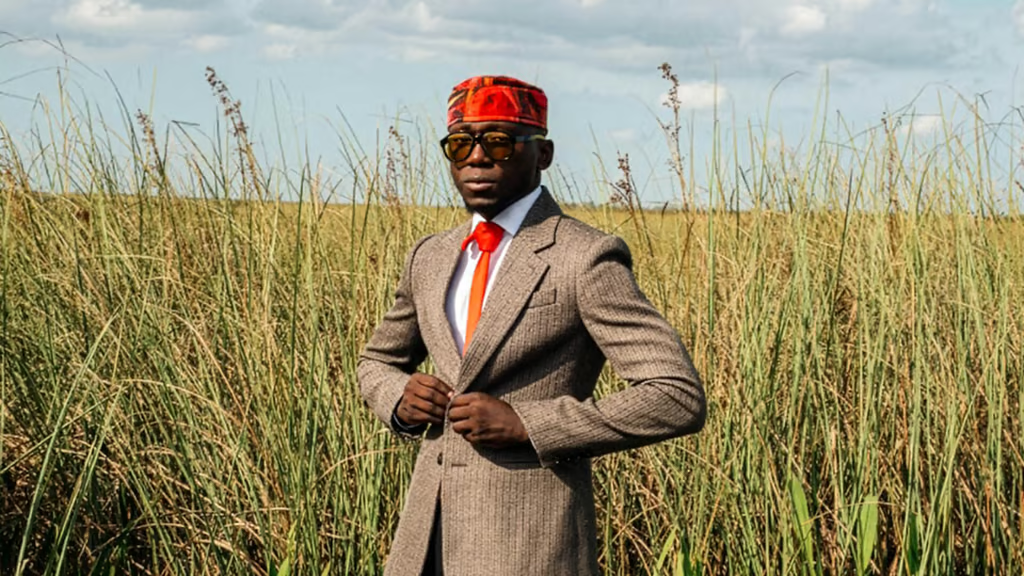

EXCLUSIVE CONTENT > BLACK SHERIF
Black Sherif Wants His Music Journey to Guide Next Generations
By Oumou Fofana • July 31, 2026
Black Sherif discusses growing up in Ghana, staying authentic, and inspiring the next generation through music.
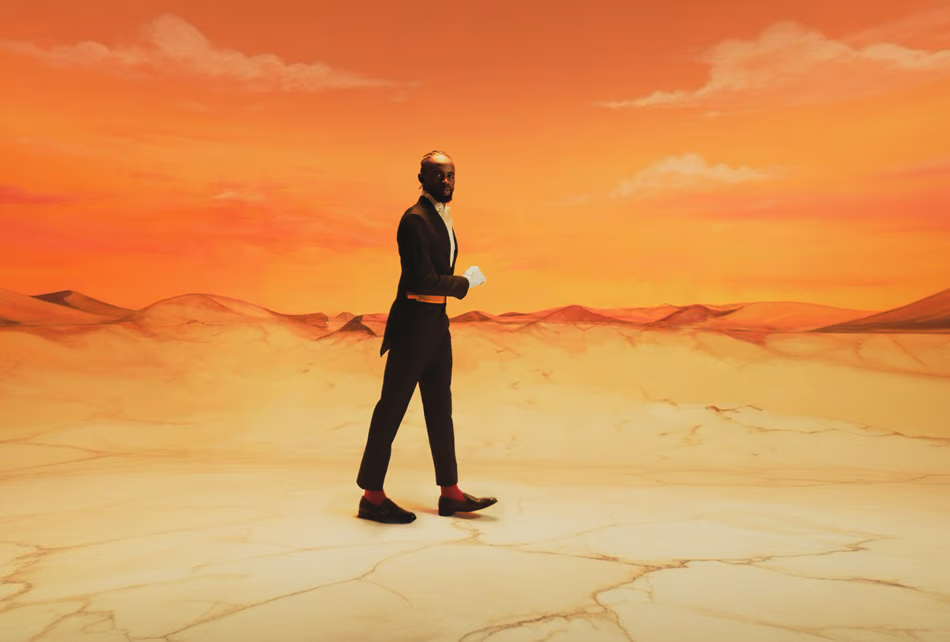
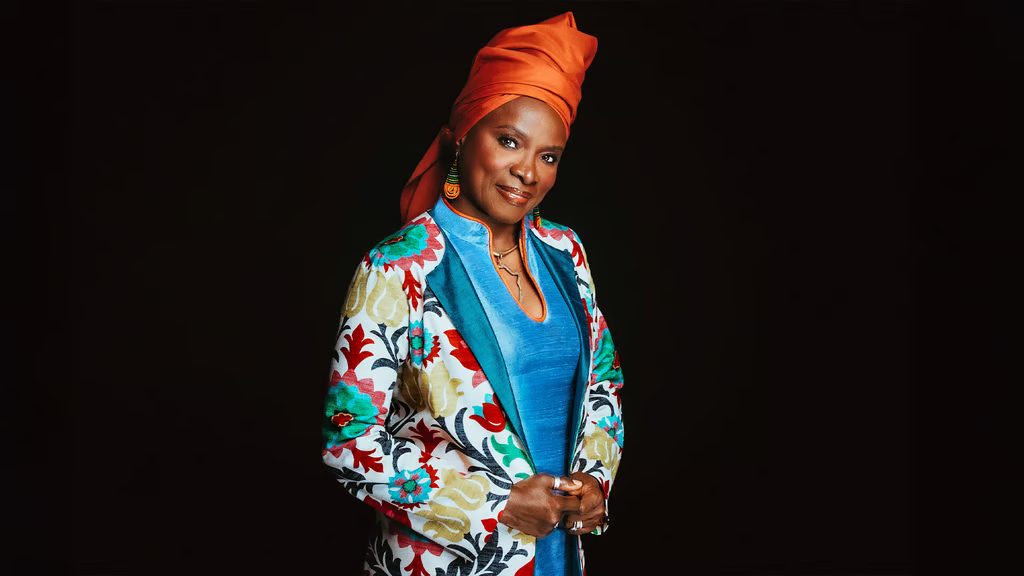
Photo Credit: Gus Sarkodee
Success did not begin in a recording studio for Black Sherif.
Long before sold-out shows, global recognition, and becoming one of Ghana's most streamed artists, music was something he absorbed through the walls of a crowded compound house in Konongo, Ghana. Christians and Muslims lived side by side. Quran recitations mixed with gospel music. Traditional durbar performances echoed through the neighborhood. The sounds were different, but together they created the foundation for an artist who would eventually become one of the most recognizable voices of his generation.
"I heard a lot. It was a variety of folk music and then modern music as well," Black Sherif tells BET.
Before audiences around the world knew him as Black Sherif, he was just a kid named Mohammed Ismail Sherif, with wide-ranging interests. He danced at weddings and birthday parties. He played football. He wrote poems in notebooks because access to a recording studio felt impossible.
What many people may not know is that his life was defined by two very different versions of himself. The outgoing child who spent time at parks and youth clubs existed alongside a quieter version shaped by life at home with his mother. Looking back, he believes those two worlds helped prepare him for the life he lives now. "Who I was around my mom and at home was very different from who I was when I wasn't at home," he explains. "Those two sides of my living kind of gave me an early ticket to balance."
That sense of balance would become important years later when music stopped being a hobby and became something he felt compelled to pursue. The turning point came during his second year of high school. "There was a very intense ignition in me that I have to pursue music," the Iron Boy hitmaker recalls.
What followed was a steady climb that transformed him from a teenager in Konongo into one of Africa's most influential young artists. Since emerging with records like "Second Sermon" and "Kwaku The Traveller," Blacko has created a sound that draws on Ghanaian Highlife, hip hop, Asakaa (also known as Ghana drill), and the storytelling traditions that shaped him growing up.
By then, music had become impossible to ignore. He thought about it constantly. He envisioned performing. He wanted to learn instruments. He wanted to understand every part of the craft. The passion was fueled partly by opportunities he never had as a child. When he was younger, he developed an interest in instruments and his school's brass band. But growing up in a conservative Muslim household sometimes meant those interests were discouraged. "There were times that I had pianos that were taken from me because I was Muslim and all of that," he says. "So I didn't have that freedom to go pursue that."
That same drive still shapes the way he approaches music. For Blacko, the goal is not simply to make songs. It is about creating something that moves him first. "I put the art first," the singer-rapper says. "And then second, the music has to move me."
“I put the art first. And then second,
the music has to move me.”
His relationship with music is deeply personal. He searches through archives, studies chord progressions, and revisits older records in pursuit of feeling. "I make the type of piece that I would love to receive from my favorite artist," he explains.
That mindset helps explain why vulnerability has become one of the defining characteristics of his catalog. Whether he is reflecting on struggle, growth, or uncertainty, he believes audiences can feel the difference when music comes from lived experience. "I believe there's a touch of very spiritual rhythm when the music is being written from a direct experience," he says. "If the music is coming from a very deep place and a firsthand experience, mostly it's different. It touches different."
“If the music is coming from a very deep place and a firsthand experience, mostly it's different. It touches different.”
His relationship with music is deeply personal. He searches through archives, studies chord progressions, and revisits older records in pursuit of feeling. "I make the type of piece that I would love to receive from my favorite artist," he explains.
That mindset helps explain why vulnerability has become one of the defining characteristics of his catalog. Whether he is reflecting on struggle, growth, or uncertainty, he believes audiences can feel the difference when music comes from lived experience. "I believe there's a touch of very spiritual rhythm when the music is being written from a direct experience," he says. "If the music is coming from a very deep place and a firsthand experience, mostly it's different. It touches different."
Music has also become his source of meaning. When he needs clarity, he turns to it. When he feels pressure, he returns to it. Even now, after years of success, he sees his future extending far beyond recording songs. "I don't just want to end up being a recording artist," he reveals. "I wanted to perform. I wanted to learn music. I wanted to learn instruments throughout my living career. I want to live the music, if you understand me."
The opportunity to do that still feels personal to him. "I feel like this is something I saw earlier in my life that I didn't have the opportunities and the freedom I have right now to pursue," he continues. "God has helped me buy that freedom."
Even as his fan base grows worldwide, Ghana remains at the center of everything he creates. "Being where I'm from is what has written my DNA," he emphasizes.
His connection to home also informs how the BET Hip Hop Award winner views conversations about African music globally. While he understands the popularity of Afrobeats as a label, he believes the continent's musical landscape is far too diverse to be reduced to a single umbrella term.
"We grew up with a mindset that we can become anything. Or I should say that for myself. Everything that I put my mind into, if I dedicate my time and then my spirit, I can be that. So, I do not want all of the music that comes out of Africa to be turned under one basket as Afrobeats or this or that,” he says. “There are people who make soul music, people with so many different interests who are actively pursuing that. So, whoever represents themselves with and proves it to be true of themselves, I think they should be called that. There are so many varieties. There’s the Dagomba in Ghana, there’s Anpansa, there's Siti."
As for why more Ghanaian artists have not yet broken through internationally, Blacko, who was crowned Artist of the Year for a second time at the 2026 Ghana Music Awards, believes the answer lies in marketing, information, and patience. "We are still finding our feet and we are still rolling our ball," he says. "And we have very good years in front of us."
He believes the next generation is already benefiting from seeing creative careers become more attainable. "I’ll use myself as an example. I have served as a big inspiration for kids in my city to make any type of art," he continues. "Stylists, writing music for people, dancing, all of that. I believe with time, we will get there."
That optimism extends to his own career. The release of his single "PopStar" signals what he describes as a new era. Recorded during a trip to Johannesburg, the song emerged after a period spent creating what he calls "heavy metal music."
"I needed some wind to blow through my catalog," he says. "Very sweet aroma, very easygoing sonic experience to happen in my catalog."
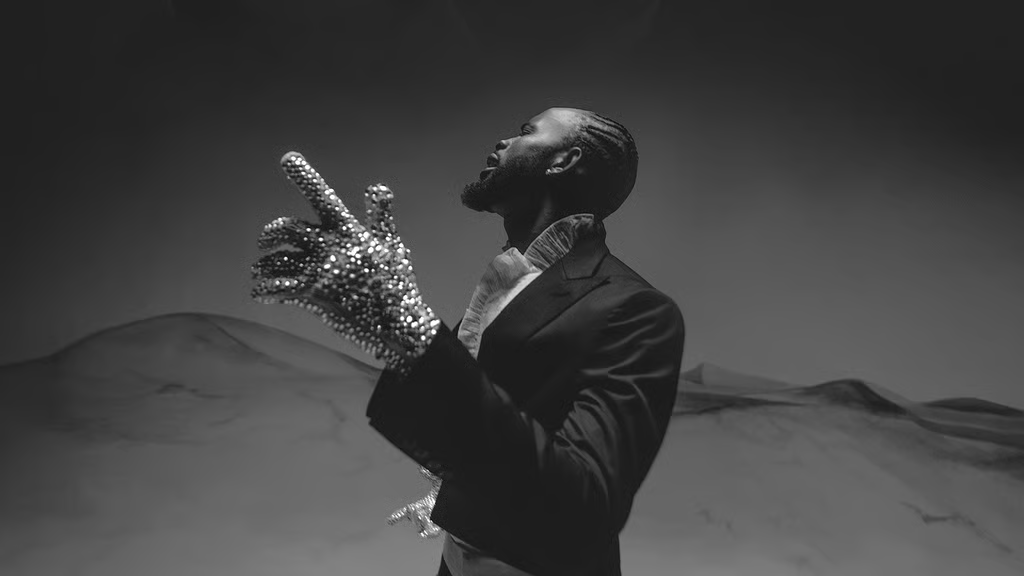
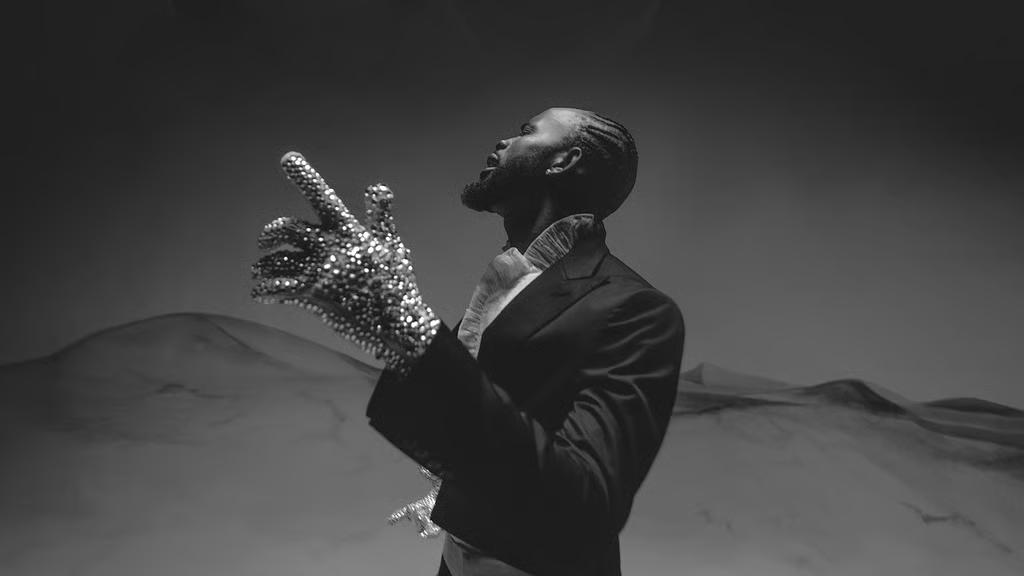
The record arrives with larger-than-life visuals that sparked comparisons to Michael Jackson. For Black Sherif, however, the influence goes beyond performance. "I think he's a symbol of perseverance and dedication," he says of Jackson. "That's heavy dedication. That's full dedication. That's full perseverance."
This commitment to growth is also why the superstar has resisted chasing trends. "I haven't even discovered half of my abilities," he says. "I do not even have time to go chase what's going on outside."
Today, Black Sherif sees himself moving closer to the entertainer he imagined becoming long before moving to Accra. When he was back where he grew up, he had a vision of who he wanted to be. Circumstances forced him to adapt. Now, he believes he is finally returning to that original path. "When I was in Konongo and I was seeing [my] future music, there was a type of entertainer that was in my vision to be,” he says. “When I moved to Accra, my situations and the environments that I found myself in kind of had to reset everything for me. Right now, I could also term that as the journey to being that entertainer that I wanted to be. That’s what I have launched right now. That's the road that I'm on right now."
At 24, Black Sherif has already become a voice for a generation navigating ambition, uncertainty and self-discovery. Yet listening to him speak, the focus remains less on accomplishments and more on possibility — both for himself and the supporters following his journey. And while his success story continues to unfold, his hopes for the next generation remain simple. "I hope my music really becomes literature in its own ways," he says. “I hope my journey finds them in moments they need it because sometimes I can’t fully describe the things I’ve created and the kind of impacts that I wanted it to have. I want them to find the music and I’ll get the testimonies later.”
More importantly, he hopes it inspires action. "I hope kids listen to my music and wake up to go do something," he continues. "I hope it takes the clouds off their dreams. I hope my music takes the clouds and the lids off their dreams."
MORE EXCLUSIVE CONTENT